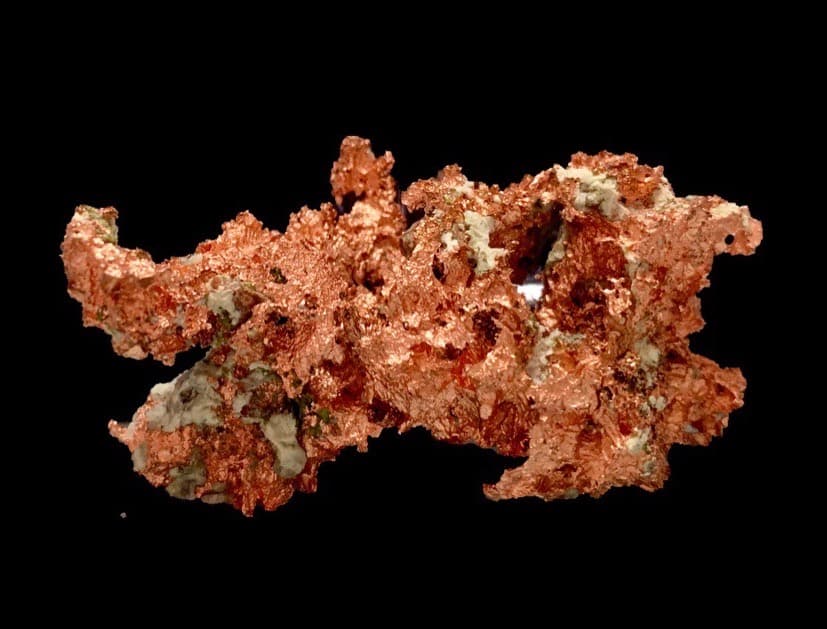
The reddish-orange metal copper is used in a range of applications, prized for its sturdiness and durability. Copper (Latin: Cuprum) is a native element with the chemical symbol Cu and atomic number 29.
The element was discovered in ancient times, with usage by tools dating back to 9000 BC. The Mesopotamians were the first to learn to extract and use copper. However, a soft and malleable metal, pure copper is ineffective for weapons and tools. Metallurgists experimented with several other metals and compounds before discovering a durable mix of tin and copper, dubbed bronze. A new era, the bronze age, followed for the next few thousand years, a period when the world was centered around the production and use of copper. Many civilizations saw the success of copper in Mesopotamia and adapted the metal into their society (Ancient Egypt, China, Greece)
Today, copper, an excellent conductor, is used to transmit power generated by the Hoover Dam to Los Angeles. The copper wireline spans more than 2,000 miles and stretches across canyons and mountainous areas. At a relatively affordable price, copper can be used for residential power lines and transmitters.
 The Hoover Dam copper transmission lines
Copper is ideal for pipelines due to its patina-colored coating formed by oxidization. This coating limits the amount of copper that can contaminate water supplies. The metal occurs naturally in many forms:
-
Native - The Native form of copper, often in large masses or refined crystals.
-
Ore - Copper can be found in ores inside other minerals and rocks.
-
Minerals and Compounds - Copper occurs in the chemical formulas of many minerals and chemical compounds.
 Copper in its native form
Copper has remained crucial since ancient times, becoming an essential metal in its many forms.
References
"Copper", Mindat, 14 July 2019 https://www.mindat.org/min-1209.html ↗
Terrence, Bell, "The Ancient History of Copper", The Balance, 14 July 2019 https://www.thebalance.com/copper-history-pt-i-2340112 ↗