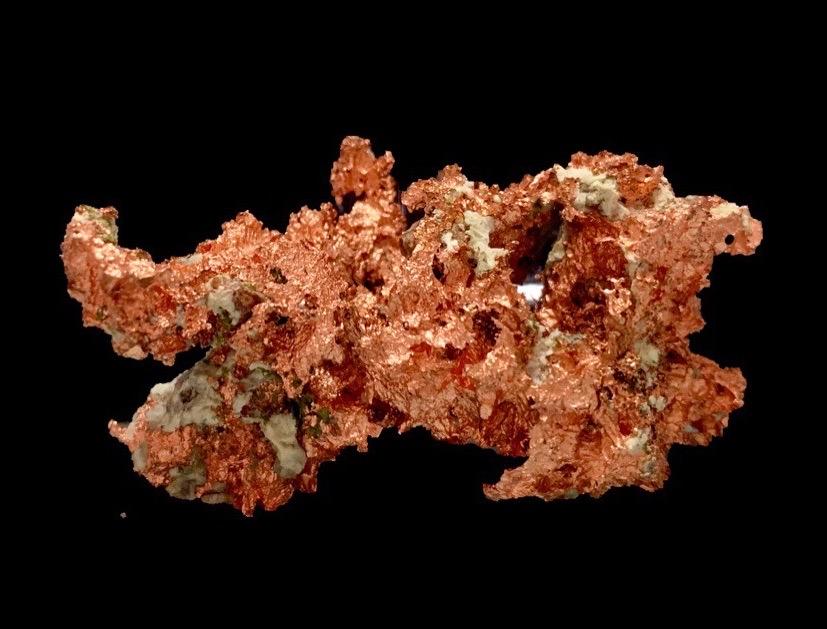
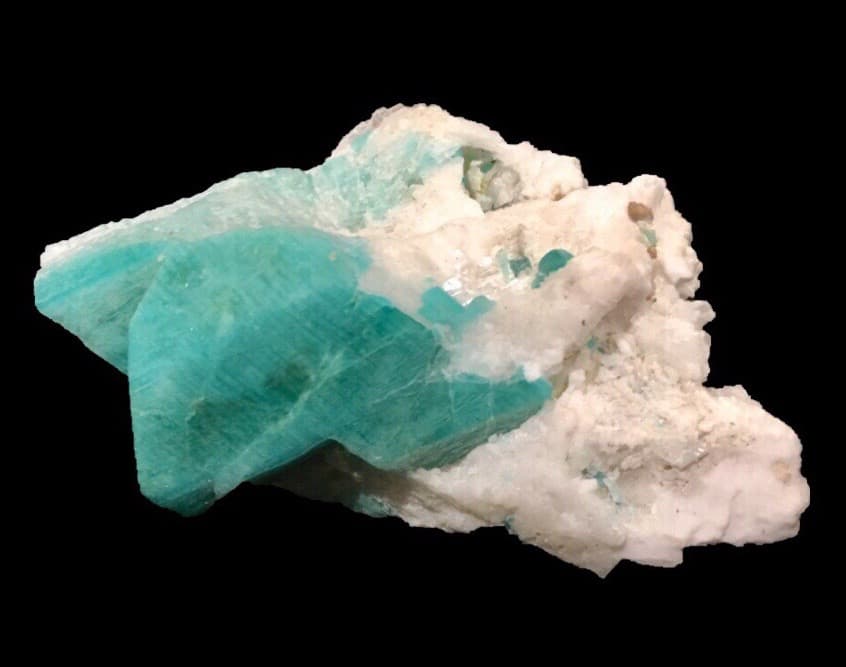
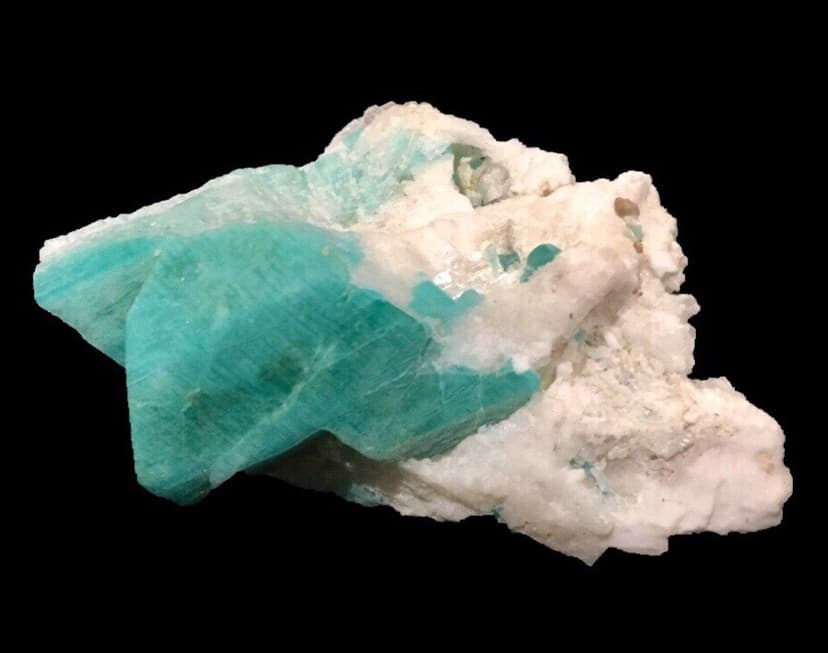
The Keweenaw Peninsula is located at the northern tip of Michigan’s Upper Peninsula, jutting into the cold waters of Lake Superior. Copper was first dug here by Native Americans thousands of years ago, and a rush in the 1840s made the region the leading copper producer in the United States for the next four decades. After more than a century of mining, the last native copper mines closed in the 1960s, and many are now preserved in a national historical park.
Copper forms in the peninsula in lava flows over a billion years old, filling gas bubbles and cracks in the rock, creating the intricately shaped twists of Copper the peninsula is famous for. Keweenaw is one of the few localities where Copper occurs natively in both crystals and solid masses, sometimes joined with native Silver.
Aside from Copper, a variety of other carbonate and silicate minerals are found, including Calcite, Datolite, Prehnite and Epidote.