The Ray Mine is located in the rugged Dripping Spring Mountains of Arizona’s Sonoran Desert, several kilometers northwest of the town of Kearny. First discovered in 1846, the deposit was named after the sister of an early miner. After decades of underground mining beginning in 1911, the mine was converted to an open pit in the 1950s, eventually swallowing the town of Ray itself. It remains an active copper mine today.
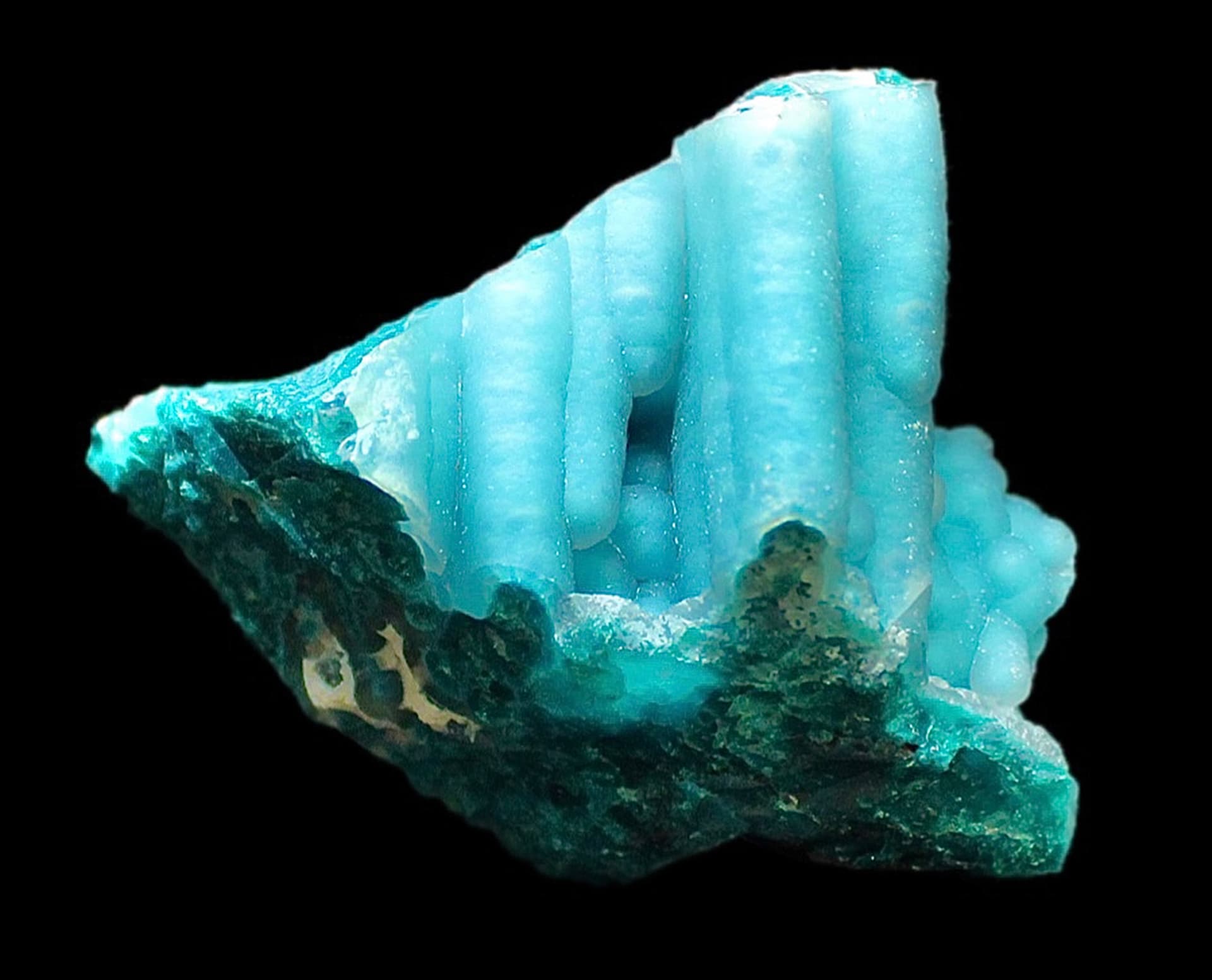
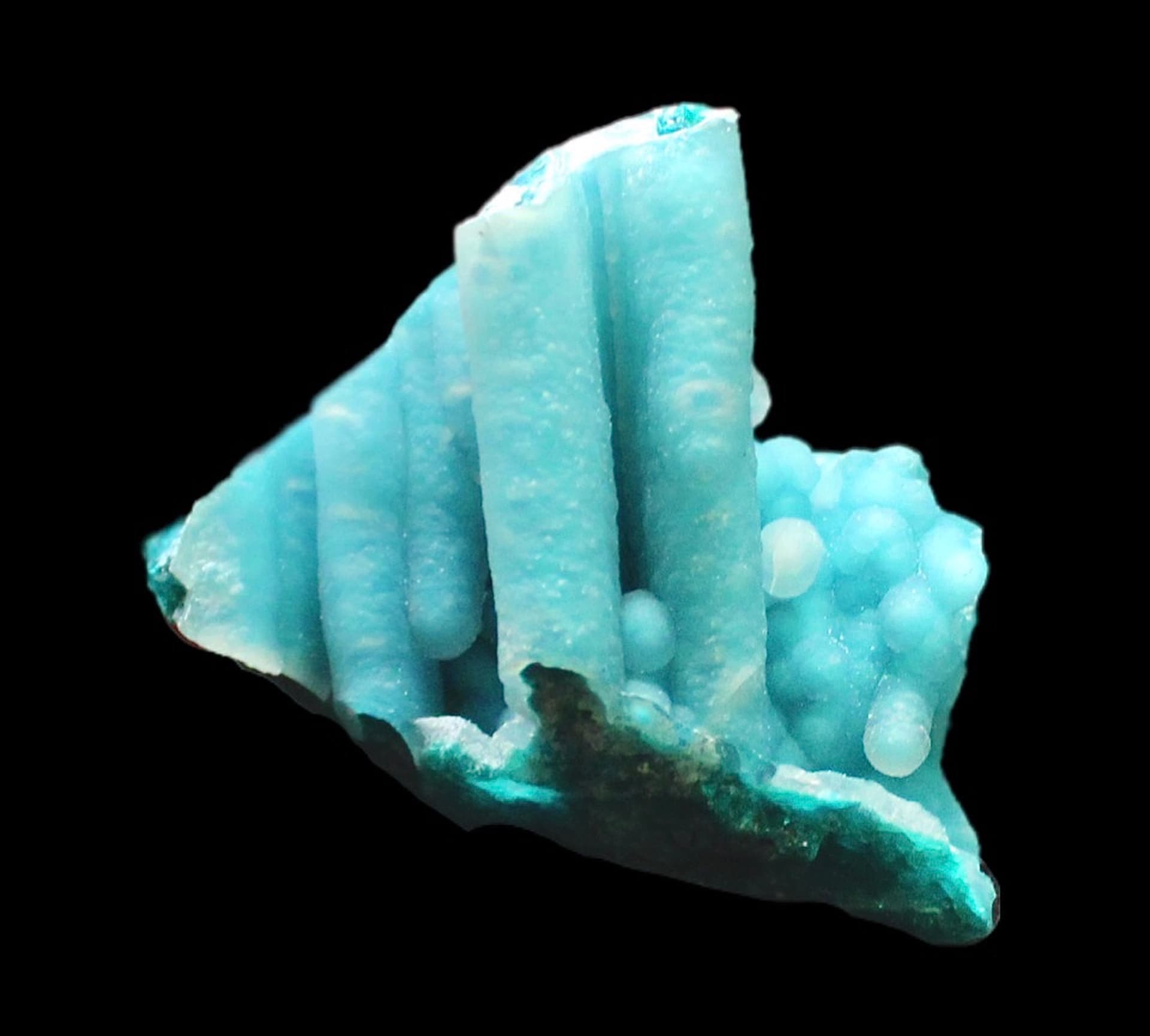
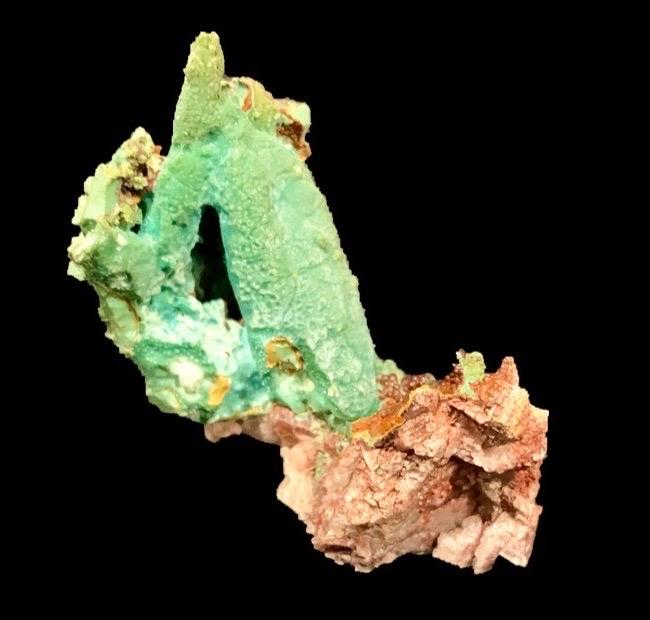
Chrysocolla forms in the mine where the upper part of the copper deposit has weathered near the surface. Ray is known for sky-blue Chrysocolla stalactites, often coated with sparkling Quartz, as well as Chrysocolla pseudomorphs that have replaced crystals of Azurite.
Aside from Chrysocolla, the mine is famous for crystallized Copper coated with red Cuprite. A few other copper minerals are found, including Malachite, Dioptase and Libethenite.